Finding your rhythm in fast-paced kitchen games
Kitchen and restaurant games can go from calm to chaotic in seconds. These practical tips help you find a steady rhythm, especially when fish dishes are on the menu.
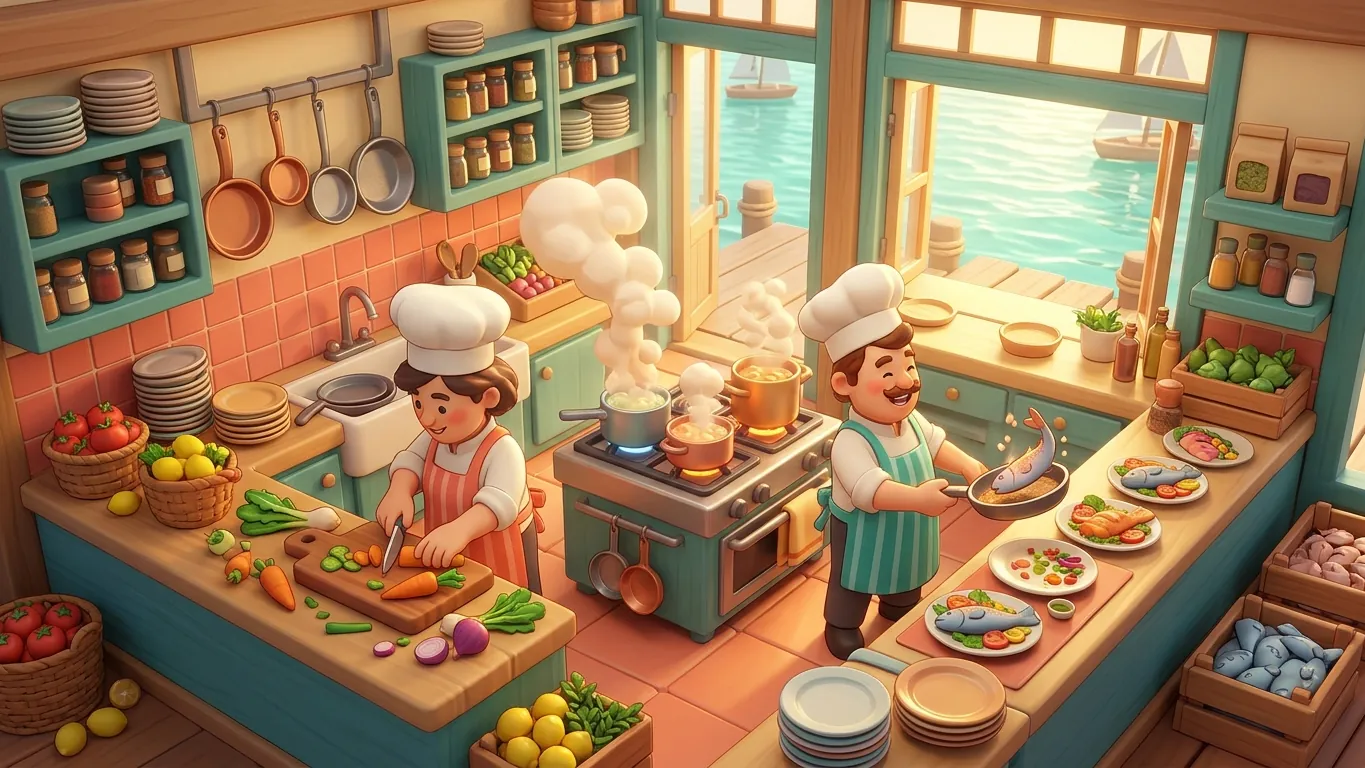
Why kitchen games feel so intense
Fast-paced kitchen games combine several pressures at once: timers on each order, ingredients that must be prepared in steps, and stations that can burn food if left alone. Everything competes for your attention. The good news is that most of this stress comes from a lack of rhythm rather than a lack of skill.
Once you build a repeatable pattern, the game starts to feel less like juggling and more like a dance. The tips below focus on creating that pattern so you can enjoy the busy energy instead of fighting it.
Learn the recipe chain first
Every dish in a kitchen game follows a chain: gather, prepare, cook, plate and serve. Fish dishes often add an extra step, such as cleaning or filleting before cooking. Spend your first few rounds simply learning each chain. Notice which steps take the longest and which can be done while something else cooks.
The longest step is usually where your attention should be. If grilling a fish takes several seconds, start it first and use that time to chop vegetables or prepare a sauce. Planning around the slowest step is one of the most reliable ways to speed up without feeling rushed.
Organize your stations
Some kitchen games let you place or rearrange equipment, while others give you a fixed layout. Either way, it helps to think about distance. If the fish station is far from the grill, you lose time walking back and forth. When you can customize, keep related steps close together.
In fixed layouts, choose a home position near the most used stations and return to it between tasks. This reduces wasted movement and keeps your mind clear. It is also useful to keep a few prepared ingredients ready during quieter moments, so you can react quickly when the orders pile up.
A calm routine for busy rounds
Use this loop whenever orders start stacking up.
- 01
Scan the order queue
Look at all current orders and spot the one with the longest cook time or nearest deadline.
- 02
Start the slowest item
Put the longest-cooking ingredient on the heat first so it works while you do other tasks.
- 03
Prep while you wait
Chop, clean or plate other ingredients during the cooking time instead of standing still.
- 04
Serve and reset
Deliver finished dishes promptly, then return to your home position to check the queue again.
Playing with friends and staying relaxed
Many kitchen games support cooperative play, which can be both hilarious and hectic. Assigning simple roles helps a lot: one player handles prep, another handles cooking, and a third serves. Communicating out loud about what you are doing prevents two people from grabbing the same fish.
Above all, remember that burnt dishes and missed orders are part of the fun. Kitchen games are designed to create chaotic moments you laugh about later. If a level feels frustrating, take a short break, then return with a single goal, like improving your timing on one dish. Small improvements add up quickly.
Related articles
 Why fishing minigames deserve more respect
An opinion piece on why fishing minigames are more than filler, exploring how they shape pacing, mood and player choice in many kinds of video games.
Read more
 From pixel to plate: a game-inspired fish dinner
Bring a cozy game kitchen into real life with a simple herb-crusted fish dinner inspired by in-game meals, plus practical food safety and prep tips.
Read more
 How fishing mechanics work in video games
A friendly explainer on casting, bite timing, reeling and tension in video game fishing, so you can understand any fishing minigame you pick up.
Read more