Moving target bar
You keep a marker inside a zone that follows the fish as it moves up and down. Small, steady taps usually work better than holding the button.
Almost every fishing minigame follows the same three beats: cast, wait, reel. Here is what is happening under the surface at each stage, and why knowing it makes you a calmer, more successful angler.
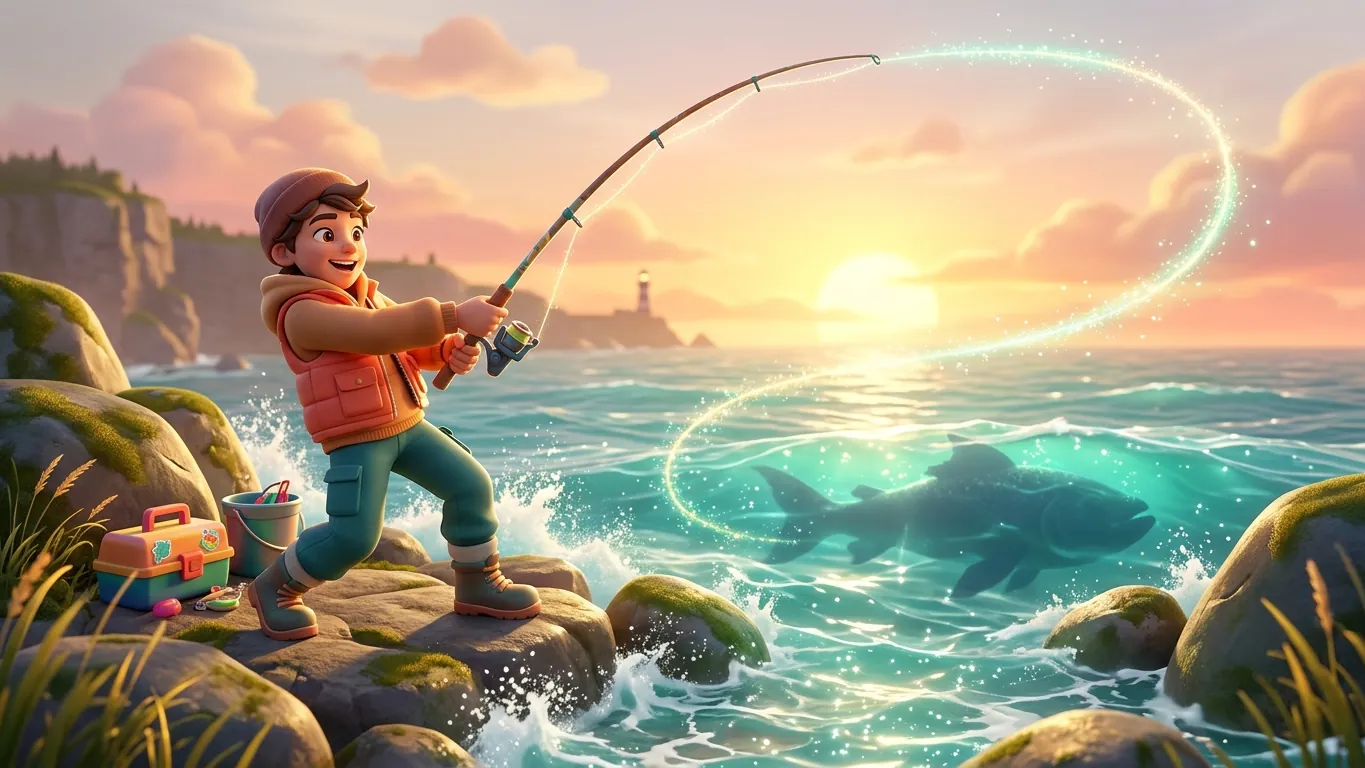
The cast is your first decision, and many games treat it as more than a button press. Often you hold a button to charge power and release it to throw. A stronger cast sends your lure farther out, where deeper water may hold different fish. A gentle cast keeps your line close to the shore, which can be useful for small species that gather near rocks or reeds.
Some games add accuracy to the mix, letting you aim at shadows, ripples or bubbles on the surface. Those visual hints usually mean something is swimming nearby. If your game shows them, it is almost always worth aiming for them rather than casting at random. Take a moment before each throw to look at the water. That small habit alone tends to improve results.
Once your line is in the water, the game typically runs a hidden timer. Each fish nearby has a chance to notice your bait, approach it and nibble. Many games show this with a bobber that twitches, dips or shakes. A small twitch is often just curiosity. A firm dip, a splash or a sound cue usually signals the real bite.
The classic beginner mistake is reacting too early. If you pull on the first twitch, the fish swims away and the timer resets. Try watching for the moment the bobber disappears completely or the controller rumbles strongly. Patience here is not about doing nothing. It is about reading the signals the game is giving you and responding to the right one.
Hooking the fish starts the most active part of the minigame. This is where designs differ the most, but the underlying idea is usually the same: you are balancing pressure against the risk of losing the fish. Pull too hard and the line may snap. Pull too gently and the fish escapes or the timer runs out.
Many games give the fish a stamina value that drops as you reel. Bigger or rarer fish often have more stamina and fight harder, darting left and right or diving. A good rhythm is to reel steadily when the fish is calm and ease off when it struggles. Watch for color changes on a tension bar or a shaking rod animation, since these are common warnings that you are close to breaking the line.
Games present the reel phase in different ways. Recognizing the style quickly helps you adjust your approach.
You keep a marker inside a zone that follows the fish as it moves up and down. Small, steady taps usually work better than holding the button.
A gauge shows how tight the line is. Your goal is to stay in the safe middle range while slowly bringing the fish in.
Buttons or directions appear on screen and you match them in time. These reward focus more than speed.
Some relaxed games resolve the catch after a single well-timed press, keeping the focus on exploration and collecting.
Once you see fishing as cast, wait and reel, any new game feels familiar within a few attempts. You know to look for shadows before casting, to ignore the first nibble and to manage tension instead of mashing buttons. That understanding turns frustration into curiosity.
It also helps you enjoy the slower moments. Fishing minigames are often designed as a breather between busier activities, so a relaxed approach is part of the fun. If a particular fish keeps escaping, change one thing at a time, such as your casting distance or reeling rhythm, and see what difference it makes. Experimenting like this is one of the quiet pleasures of virtual fishing.
 A beginner's guide to cozy fishing games
New to cozy fishing games? This beginner guide walks you through your first session, choosing spots, managing energy and avoiding common early mistakes.
Read more
 Cooking buffs explained: why in-game meals matter
Discover how cooking buffs work in video games, how ingredient quality affects meals, and how to time food bonuses without stressing over every recipe.
Read more
 Tips for completing your in-game fish collection
Practical, relaxed tips for filling your in-game fish collection, from keeping a simple log to reading clues and building a calm weekly routine.
Read more