Energy restorers
Simple dishes that refill stamina so you can keep casting, farming or exploring a little longer.
In many games, a cooked fish is more than a snack. This explainer looks at how cooking buffs work, how ingredients shape the result, and how to use meals wisely.
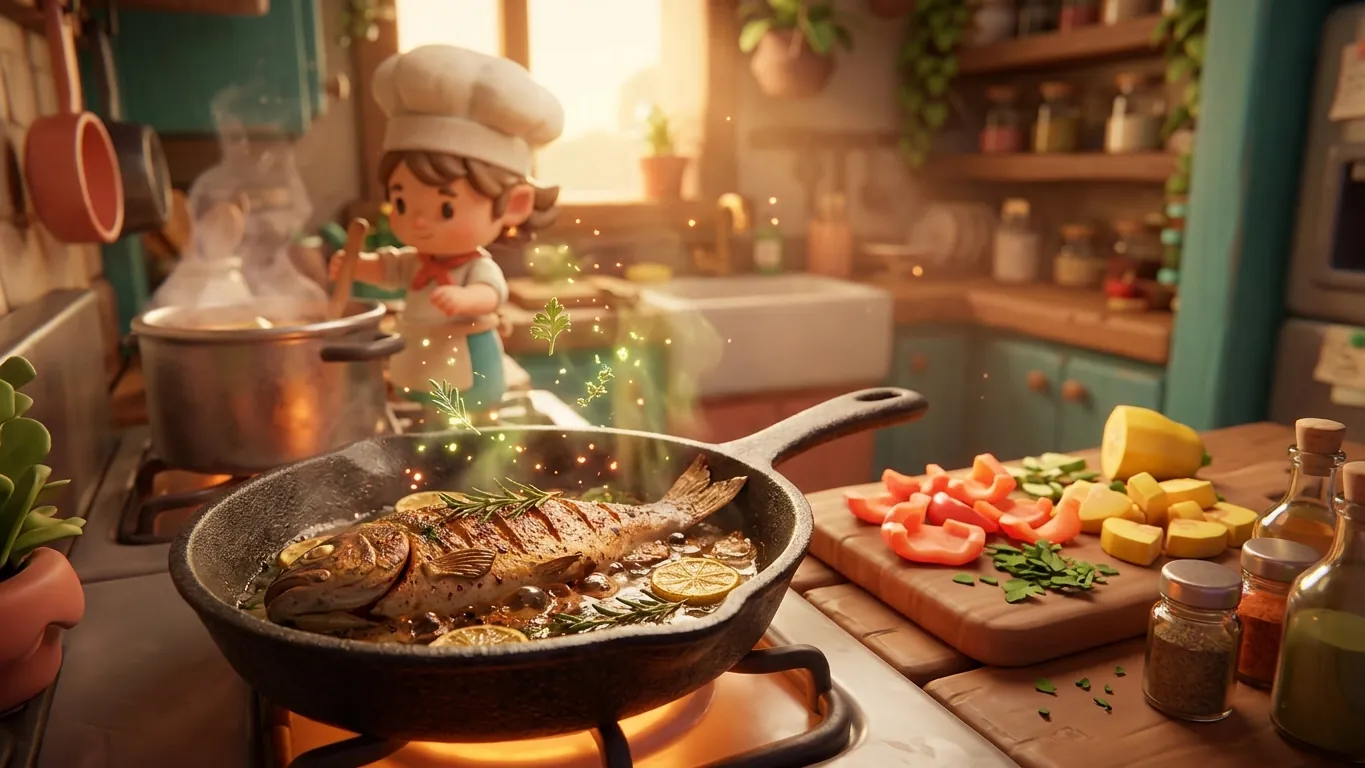
A cooking buff is a temporary bonus you receive after eating a prepared meal. Depending on the game, it might restore health or energy, increase movement speed, make it easier to catch fish, boost resistance to cold or improve luck when searching for items. The buff usually lasts for a set amount of in-game time and then fades.
The idea behind this design is to connect activities. You catch fish, combine them with other ingredients, and the resulting meal helps you do something else better. Understanding this loop helps you see the kitchen not as a side feature but as part of your overall plan.
Many games assign quality levels to ingredients, sometimes shown with stars, colors or labels. A higher-quality fish or vegetable often produces a stronger or longer-lasting effect. Some games also reward variety, so a dish with several different ingredients may give a better bonus than a simple one.
Freshness can play a role too. Certain titles let food spoil over time, encouraging you to cook soon after a fishing trip. Others let you store ingredients indefinitely. Check how your game handles this before stockpiling, because nothing is more disappointing than opening a chest full of spoiled catch. When in doubt, cook common fish right away and save rare ingredients for recipes you know are worth it.
One of the most common questions about buffs is whether they stack. In many games, eating a second meal with the same effect simply refreshes the timer rather than doubling the bonus. Some games allow different types of buffs to run together, such as a speed bonus alongside a fishing bonus. Others only allow one active meal at a time, replacing the old effect with the new one.
Timing matters. Eating a fishing buff right before a long session at a difficult spot makes sense. Eating it on your way to bed does not. Try to match meals to your plans for the next stretch of play, and keep an eye on the buff icon or timer so you know when to refresh.
Exact recipes vary from game to game, but these general categories show up again and again.
Simple dishes that refill stamina so you can keep casting, farming or exploring a little longer.
Meals that make bites come faster or reeling easier, ideal before chasing a tricky species.
Food that boosts speed or protects against harsh weather while you travel to distant spots.
Dishes that slightly raise the chance of rare finds, useful for collectors with a long checklist.
It is easy to get absorbed in optimizing every meal, but cooking in cozy games is meant to be enjoyable. A practical approach is to keep a small set of reliable dishes ready and experiment with new recipes when you have spare ingredients. Many games reward discovery with new recipe entries, so trying odd combinations can be its own small adventure.
If a game feels overwhelming, focus on one or two buffs that support what you do most. For a fishing-focused player, a dependable energy meal and a fishing helper cover most needs. Everything else can come later, at your own pace.
 Tips for completing your in-game fish collection
Practical, relaxed tips for filling your in-game fish collection, from keeping a simple log to reading clues and building a calm weekly routine.
Read more
 Rods, bait and tackle: a smart upgrade guide
Learn how to plan rod, bait and tackle upgrades in fishing games, what each piece of gear usually changes, and how to spend resources wisely.
Read more
 How seasons and weather shape your fishing spots
Understand how in-game seasons, weather and time of day change which fish appear, and learn how to plan fishing trips around a changing game world.
Read more